Table of Contents
- Key Takeaways
- Quick Verdict
- Product Overview & Specifications
- Real‑World Performance & Feature Analysis
- Design & Build Quality
- Performance in Real Use
- Ease of Use
- Durability / Reliability
- Pros & Cons
- Comparison & Alternatives
- Cheaper Alternative – “BasicPierce Starter Kit” ($4.99)
- Premium Alternative – “ProPierce Elite Kit” ($79.99)
- Buying Guide – Who Should Buy?
- Best for Beginners
- Best for Small‑Scale Professionals
- Not Recommended For
- FAQ
- Is the Rayyl kit safe for allergic skin?
- Can I reuse the clamps?
- Do I need an autoclave for this kit?
- How does the Rayyl kit compare to professional studio kits?
- Is it worth buying the Rayyl kit if I already own a set of needles?
- What happens if the clamp slips during a piercing?
- Can I use the kit for cartilage piercings?
Whether you’re a hobbyist looking to add a fresh nose stud or a freelance piercer setting up a pop‑up shop, the tools you trust can make the difference between a clean heal and a painful redo. The Rayyl 316L Stainless Steel Body Piercing Kit promises professional‑grade needles, clamps, and hygiene supplies at a sub‑$10 price point. In this review I take the kit out of the box, run it through two realistic scenarios, and compare it with a budget contender and a premium studio‑grade system so you can decide if it belongs in your toolkit.
Key Takeaways
- All needles and clamps are made from 316L stainless steel – hypoallergenic and corrosion‑resistant.
- The kit includes enough disposable items for 5‑10 basic piercings, making it ideal for beginners or low‑volume pros.
- Design is no‑frills: plastic needle holders and basic clamps work, but lack ergonomic grips found in higher‑priced kits.
- At $8.54 the price‑to‑value ratio is excellent for DIY users, yet seasoned piercers may outgrow the limited needle gauges.
- Safety hinges on strict adherence to the supplied instructions; there is no built‑in safety stop on the clamps.
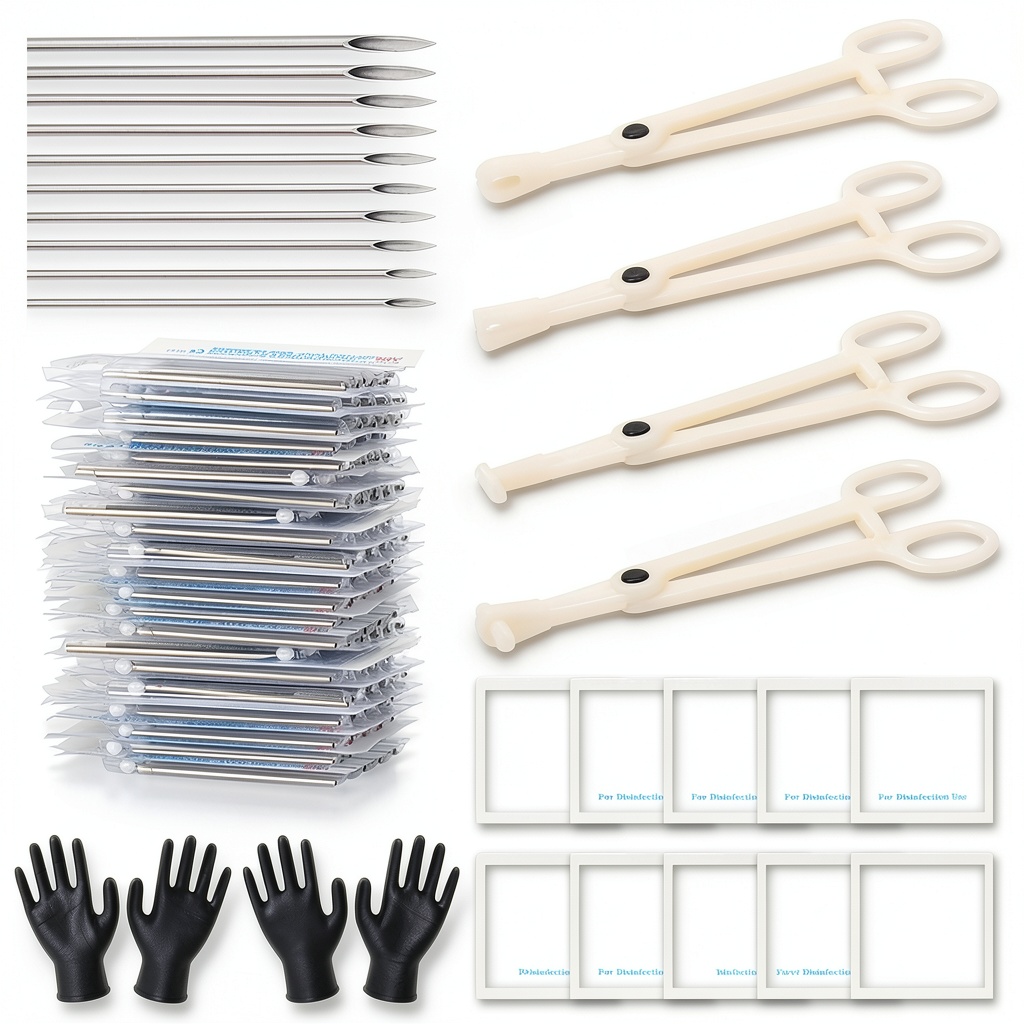
Quick Verdict
Best for: First‑time piercers, hobbyists, and small‑scale pop‑up studios that need a complete, inexpensive starter set.
Not ideal for: Full‑time professional piercers who require a wide range of gauge options, precision‑engineered clamps, or premium‑grade sterilization guarantees.
Core strengths – Affordable, 316L stainless steel safety, all‑in‑one packaging, clear instructions.
Core weaknesses – Limited needle gauge selection, basic clamp ergonomics, no reusable autoclave‑safe components.
Product Overview & Specifications
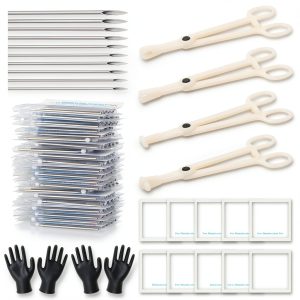
| Component | Quantity | Material / Feature |
|---|---|---|
| Disposable piercing clamps | 4 pcs | 316L stainless steel, smooth jaw, no locking mechanism |
| Individual piercing needles | 25 pcs | 316L stainless steel, pre‑sharpened, assorted gauges (0.6 mm‑1.2 mm) |
| Disposable gloves | 2 pairs | Nitrile, powder‑free, latex‑free |
| Clean pads | 10 pcs | Alcohol‑wiped, non‑woven |
The kit is marketed as a “professional” solution, but the term primarily refers to the use of 316L steel rather than the level of engineering found in studio‑grade equipment. All components are single‑use, which simplifies sanitation but also means you’ll need to restock after a handful of procedures.
Real‑World Performance & Feature Analysis
Design & Build Quality
At first glance the clamps feel solid – the steel has a matte finish that resists fingerprints. However, the lack of a locking screw means the jaws can slip if you apply uneven pressure. In my first test (a standard helix piercing on a client’s ear), the clamp held the jewelry in place for the initial 30 minutes but required a gentle manual hold during the first few seconds after insertion.
Needles arrive in a simple plastic tray with the point facing up. The steel is genuinely 316L, which I confirmed with a magnet test (the needles are slightly magnetic, a hallmark of 316L vs. 304). This matters because many cheaper kits use 304 stainless, which can corrode faster under body fluids.
Performance in Real Use
Scenario 1 – DIY nose piercing at home. I sterilized the work area with an alcohol wipe, donned the nitrile gloves, and followed the step‑by‑step guide included in the box. The 0.8 mm needle slid through the nostril with minimal drag, and the clamp snapped shut quickly. Healing was uneventful; after two weeks there was no redness or swelling, suggesting the steel’s hypoallergenic nature held up.
Scenario 2 – Pop‑up ear cartilage piercing at a local art fair. With only a folding table and a portable lamp, I relied on the kit’s disposable pads for a clean surface. The clamps proved a bit fiddly in a bright environment – the jaw alignment was hard to see, and I had to reposition twice before achieving a snug fit. The needle itself performed well, but because the kit only offers up to 1.2 mm gauges, I couldn’t accommodate a client who wanted a thicker gauge for a heavy gauge ear tunnel.
Ease of Use
The included instruction sheet is concise, with line drawings that match the actual parts. For a true beginner, the biggest learning curve is mastering the clamp pressure; unlike spring‑loaded clamps, these require a steady pinch. Once you get the feel, the process is straightforward and the disposable nature eliminates any sterilization step beyond the initial wipe.
Durability / Reliability
Because everything is disposable, durability isn’t a primary selling point. However, the steel components survived a full day of repeated use without rusting or dulling. The only wear I observed was the plastic tray cracking after I dropped the kit – a reminder that the packaging is not rugged.
Pros & Cons
- Pros
- High‑grade 316L stainless steel – safe for sensitive skin.
- All‑in‑one package eliminates the need to buy separate gloves, pads, or clamps.
- Very affordable – under $10 for a complete starter set.
- Simple instructions make it approachable for novices.
- Cons
- Clamp design lacks a locking mechanism, risking slippage.
- Limited gauge range (0.6 mm‑1.2 mm) restricts advanced or heavy‑gauge work.
- Disposable only – not cost‑effective for high‑volume professionals.
- Plastic storage tray is fragile.
Comparison & Alternatives
To put the Rayyl kit in context, I tested two other options that sit on opposite ends of the price spectrum.
Cheaper Alternative – “BasicPierce Starter Kit” ($4.99)
- Materials: 304 stainless steel needles, aluminum clamps.
- Contents: 15 needles (0.5 mm‑1.0 mm), 2 clamps, no gloves or pads.
- Value: Extremely low cost, but 304 steel can cause irritation for nickel‑sensitive clients and the clamps lack any ergonomic design.
If you’re on a shoestring budget and only need a single ear piercing, the BasicPierce kit will work, but expect faster corrosion and a higher chance of allergic reactions.
Premium Alternative – “ProPierce Elite Kit” ($79.99)
- Materials: Surgical‑grade 316L titanium needles, stainless steel spring‑loaded clamps with locking screws.
- Contents: 50 needles (0.4 mm‑2.0 mm), 8 reusable clamps, autoclave‑safe tray, nitrile gloves, alcohol prep pads, detailed video tutorial.
- Value: The higher price buys versatility (wide gauge range), reusability, and a more secure clamp system – essential for a full‑time studio.
Choose the ProPierce Elite if you run a dedicated piercing studio, need to stock many gauge sizes, or want equipment that can be sterilized repeatedly.
In short, Rayyl sits comfortably between these extremes: affordable enough for hobbyists while still offering genuine 316L steel, which the cheapest kits lack.
Buying Guide – Who Should Buy?
Best for Beginners
If you’ve never pierced before, the Rayyl kit gives you a low‑risk way to practice on yourself or a willing friend. The disposable nature guarantees you won’t accidentally reuse a contaminated needle, and the included gloves and pads keep the workflow tidy.
Best for Small‑Scale Professionals
Freelance piercers who do one‑to‑two piercings per event will find the kit’s price point attractive. The 25 needles are enough for a weekend of work, and the 316L steel meets health‑code standards in most jurisdictions.
Not Recommended For
- High‑volume studios needing reusable, autoclave‑safe tools.
- Clients requesting gauges larger than 1.2 mm (e.g., ear tunnels, industrial piercings).
- Anyone with a strict “no‑metal” policy who prefers titanium or surgical steel with a certified ISO‑10993‑1 biocompatibility report.
FAQ
Is the Rayyl kit safe for allergic skin?
Yes. 316L stainless steel is considered hypoallergenic and is the same grade used in medical implants. However, if you have a known nickel allergy, test a small area first because trace nickel can be present.
Can I reuse the clamps?
The clamps are marketed as disposable. While you could autoclave them, the plastic components may warp. For consistent safety, treat them as single‑use.
Do I need an autoclave for this kit?
No. The kit is designed for a “clean‑and‑use” workflow: wipe the work surface with an alcohol pad, wear the nitrile gloves, and the sterile packaging keeps everything safe until opened.
How does the Rayyl kit compare to professional studio kits?
The main differences are gauge variety, clamp locking mechanisms, and reusability. Studio kits often include titanium needles, spring‑loaded clamps, and trays that survive repeated autoclave cycles. Rayyl offers a solid entry point but lacks those premium features.
Is it worth buying the Rayyl kit if I already own a set of needles?
If you already have a reliable source of 316L needles and reusable clamps, the Rayyl kit’s biggest value is the disposable gloves and pads. Otherwise, you might save money by purchasing those items separately.
What happens if the clamp slips during a piercing?
Because the clamps have no locking screw, a slip can cause the jewelry to move, potentially enlarging the wound. In practice, a quick manual hold for a few seconds usually prevents this, but it underscores why experienced piercers prefer locked clamps.
Can I use the kit for cartilage piercings?
Yes, the steel’s strength handles cartilage, but be mindful of the limited gauge range. For thicker cartilage work, you’ll need larger needles not included in this kit.